
The Hidden History of Plants: Belladonna — The Poison That Made Witches
Updated: Jul 9
The Hidden History of Plants: Belladonna — The Poison That Made Witches
Belladonna: Beauty, Poison, and the Origins of a Dark Legend
Few plants have inspired as much fear, fascination, and folklore as belladonna. Known scientifically as Atropa belladonna and commonly called deadly nightshade, this striking plant has spent centuries at the crossroads of medicine, poison, beauty, and witchcraft. Its glossy black berries, deep purple flowers, and powerful chemical compounds make it one of the most feared plants in Europe. Yet, despite its deadly reputation, belladonna has played an important role in medicine and remains the source of compounds still used by physicians today.
How did a medicinal plant become forever linked to witches, flying ointments, and dark magic? The answer lies in a history that is every bit as strange as the legends themselves.
A Plant Named for Death
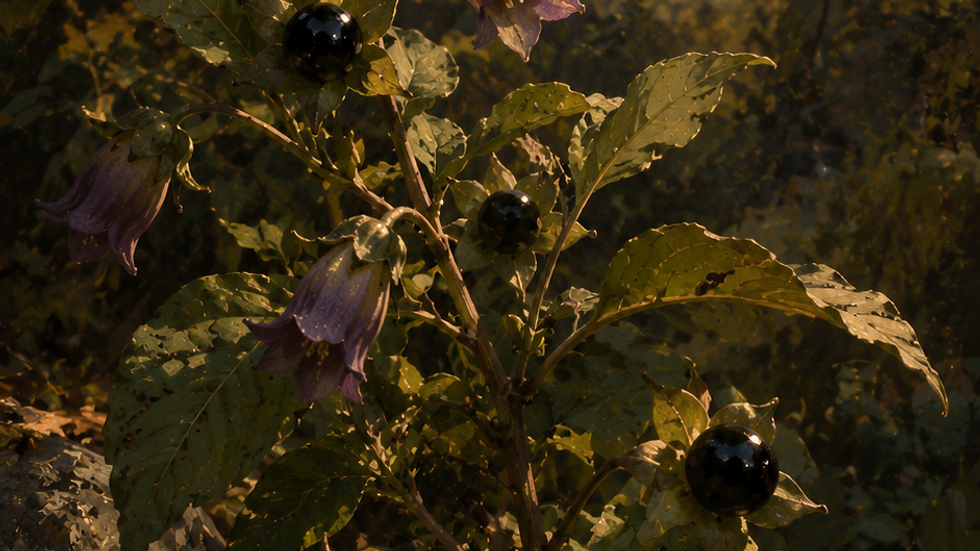
Belladonna belongs to the nightshade family (Solanaceae), which also includes tomatoes, potatoes, peppers, and tobacco. Native to Europe, North Africa, and parts of Western Asia, the plant thrives in woodland clearings and disturbed soils.
Its scientific name reveals much about its reputation. The genus name Atropa comes from Atropos, one of the three Fates of Greek mythology. Atropos was responsible for cutting the thread of life, determining the moment of death. The species name belladonna means “beautiful woman” in Italian—a reference to one of the plant’s most unusual historical uses. Even in its name, belladonna combines beauty and death.
The Poison Behind the Legend
Every part of the belladonna plant contains potent tropane alkaloids, including atropine, hyoscyamine, and scopolamine. These compounds affect the nervous system by blocking specific neurotransmitter receptors.
In small doses, they can cause dilated pupils, dry mouth, increased heart rate, and altered perception. In larger amounts, they can produce confusion, hallucinations, delirium, seizures, respiratory failure, and death.

The berries are particularly dangerous because they appear attractive and edible. Historically, accidental poisonings were common, especially among children. Because the effects often included vivid hallucinations, disorientation, and sensations of floating or flying, belladonna quickly became associated with supernatural experiences.
The “Beautiful Woman” of the Renaissance
The name belladonna originated during the Italian Renaissance. Women seeking a fashionable appearance reportedly used preparations made from the plant to dilate their pupils. Large, dark pupils were considered attractive because they created an appearance of excitement, beauty, and desire.
The practice was not without consequences. Repeated exposure could cause blurred vision, light sensitivity, and long-term eye damage. Yet, the cosmetic trend persisted because the dramatic effect was considered worth the risk.
Ironically, one of history’s deadliest plants earned its name from a beauty treatment.
Belladonna and the Witchcraft Panic
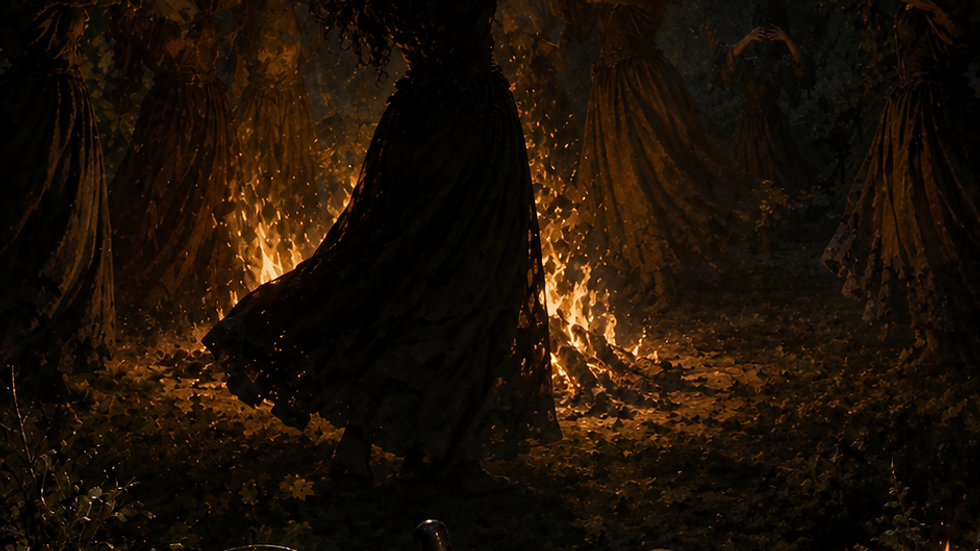
Belladonna’s strongest connection to folklore emerged during the late Middle Ages and Early Modern period, when Europe experienced widespread witchcraft fears and persecutions. Historical accounts describe belladonna as one of several plants allegedly used in “flying ointments,” mysterious salves associated with witches. These preparations often contained other nightshade-family plants such as henbane and mandrake.
When absorbed through the skin, the compounds in these plants could induce intense hallucinations. Users sometimes reported sensations of flying, shape-shifting, traveling great distances, or attending gatherings with supernatural beings. Modern historians and ethnobotanists believe these experiences may have contributed to stories of witches riding broomsticks to secret sabbaths. While many details of witch trial testimony were influenced by fear, torture, and religious persecution, the hallucinogenic effects of belladonna likely helped fuel some of the enduring legends.

The plant became so closely associated with witchcraft that it was often referred to as one of the classic “witches’ herbs.”
Poison, Politics, and Assassination
Belladonna’s reputation extended beyond folklore. Throughout history, deadly nightshade gained notoriety as a poison. Ancient Roman accounts and later European legends frequently linked the plant to political intrigue and assassination attempts.
While many stories remain impossible to verify, the plant’s toxic properties made it a logical candidate for both real and imagined poisonings. The line between historical fact and folklore became increasingly blurred, adding to belladonna’s aura of mystery. By the Renaissance, the plant was equally feared by physicians, nobles, and ordinary villagers.
From Witch’s Herb to Modern Medicine
Despite its dark history, belladonna eventually found a legitimate place in scientific medicine.

In the nineteenth century, researchers isolated atropine from the plant and began studying its effects in a controlled manner. This work transformed belladonna from a mysterious folk remedy into a source of valuable pharmaceutical compounds.
Today, atropine is used in modern medicine to:
Dilate pupils during eye examinations
Treat certain types of slow heart rate
Reduce secretions during medical procedures
Serve as an antidote for specific poisonings and nerve-agent exposures
Other compounds derived from belladonna continue to influence treatments for motion sickness, gastrointestinal disorders, and neurological conditions. The same chemicals once blamed for witchcraft now save lives in hospitals around the world.
The Legacy of Belladonna
Belladonna occupies a unique place in human history. It was feared as a poison, celebrated as a cosmetic, revered as a medicine, and condemned as a tool of witches. Few plants have accumulated such a powerful collection of myths and realities.
Its story reminds us that the boundary between medicine and poison is often a matter of dosage, knowledge, and context. The very compounds that inspired tales of flight and sorcery eventually helped advance modern pharmacology.
For centuries, people saw belladonna as a doorway to the supernatural. Today, we understand the chemistry behind the legends—but the plant remains just as fascinating as ever.
In the end, belladonna may not have made witches. But it certainly helped create the stories that made them unforgettable.
Conclusion: Embracing Nature's Complexity
As we explore the rich history of belladonna, we uncover the intricate relationship between nature and humanity. This plant teaches us about the duality of life—how something can be both beautiful and dangerous. It encourages us to respect nature's power and to seek knowledge about the plants we encounter.
Whether we view belladonna through the lens of history, medicine, or folklore, it remains a symbol of the complex interplay between life and death. Let us appreciate the stories behind the plants that surround us, as they often hold lessons about our own existence.
Works Cited
“Atropa bella-donna (Belladonna, Deadly Nightshade).” North Carolina State Extension Gardener Plant Toolbox, North Carolina State University, https://plants.ces.ncsu.edu/plants/atropa-bella-donna/.
Berdai, Mohamed A., et al. “Atropa Belladonna Intoxication: A Case Report.” Pan African Medical Journal, vol. 11, no. 72, 2012, https://pmc.ncbi.nlm.nih.gov/articles/PMC3361210/.
“Deadly Nightshade: A Botanical Biography.” Royal College of Physicians of Edinburgh, https://www.rcpe.ac.uk/heritage/heritage-blog/deadly-nightshade-botanical-biography.
“The Powerful Solanaceae: Belladonna.” U.S. Forest Service, https://www.fs.usda.gov/wildflowers/ethnobotany/Mind_and_Spirit/belladonna.shtml.
“Belladonna, Atropa Belladonna.” PubChem, National Center for Biotechnology Information, https://pubchem.ncbi.nlm.nih.gov/compound/Atropa-Belladonna.


Comments