
The Hidden History of Plants: Mugwort — The Herb Between Worlds
The Hidden History of Plants: Mugwort — The Herb Between Worlds
For thousands of years, one humble plant has stood at the crossroads of medicine, magic, and myth. Growing along roadsides, riverbanks, and forgotten fields, mugwort has quietly accompanied humanity through some of its oldest rituals and traditions.
Known scientifically as Artemisia vulgaris, mugwort has earned many names throughout history, but perhaps none are more fitting than “The Herb Between Worlds.” Revered by healers, travelers, dreamers, and spiritual practitioners alike, mugwort has long been associated with the boundaries between the ordinary and the unseen.
But how did a common roadside weed become one of the most mystically charged plants in human history?

What Is Mugwort?
Mugwort (Artemisia vulgaris) is a perennial herb native to Europe, Asia, and northern Africa. Today, it grows throughout much of the world, often thriving in disturbed soils and neglected spaces.
A member of the daisy family (Asteraceae), mugwort is recognizable by its deeply divided green leaves with silvery undersides and its aromatic scent when crushed.
Although many people know mugwort today for its association with dreams and spiritual practices, its historical uses extend far beyond folklore.
The Plant of Travelers and Protection
In ancient Europe, mugwort was considered a protective herb.
Roman soldiers reportedly placed mugwort in their sandals to ease tired feet during long marches. The Roman naturalist and author Pliny the Elder wrote that travelers who carried mugwort would be protected from fatigue during their journeys.
Across medieval Europe, mugwort was often woven into belts, wreaths, and protective charms. It was believed to guard against evil spirits, misfortune, and wandering supernatural forces.
One of the most famous references to mugwort appears in the Anglo-Saxon text known as the Nine Herbs Charm, where mugwort is described as the oldest of herbs and credited with powerful healing and protective abilities.
For people living in a world where disease, famine, and unexplained events were common, plants like mugwort offered a sense of security and connection to the natural world.
Mugwort and the World of Dreams
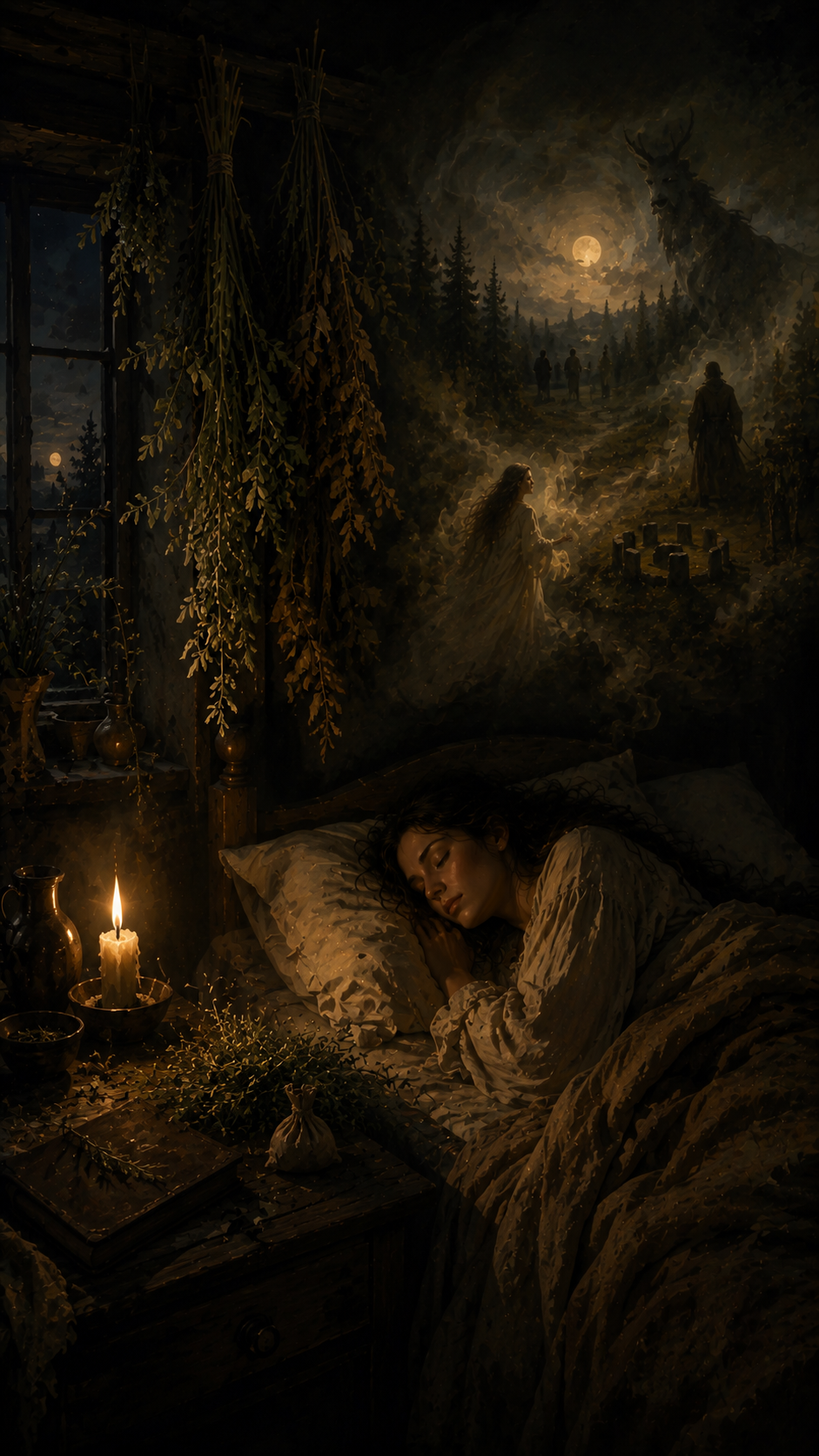
Perhaps no aspect of mugwort’s history is more famous than its connection to dreams.
For centuries, people across Europe and Asia believed mugwort could enhance dreaming, encourage vivid visions, and improve dream recall.
In medieval traditions, mugwort was often stuffed into pillows or hung near sleeping areas. Some believed the plant could reveal hidden truths through dreams or provide guidance from the spiritual realm.
These beliefs likely contributed to mugwort’s reputation as a plant that existed between waking and sleeping, between the physical and the spiritual.
While modern science has not confirmed many of these traditional claims, mugwort remains popular among herbal enthusiasts who continue to use it in dream-related rituals and practices.
A Sacred Herb in Asia
Mugwort’s significance extends far beyond Europe.
In traditional Chinese medicine, mugwort has been used for thousands of years in a practice known as moxibustion. Dried mugwort leaves are processed into a substance called moxa, which is burned near specific acupuncture points to generate therapeutic heat.
Moxibustion remains an important component of traditional East Asian medicine and continues to be practiced around the world today.
In Japan, mugwort—known as yomogi—has also been used in foods, teas, and traditional wellness practices for centuries.
Its widespread use across multiple cultures demonstrates how deeply intertwined this plant became with human health and tradition.
Folklore, Magic, and the Unseen
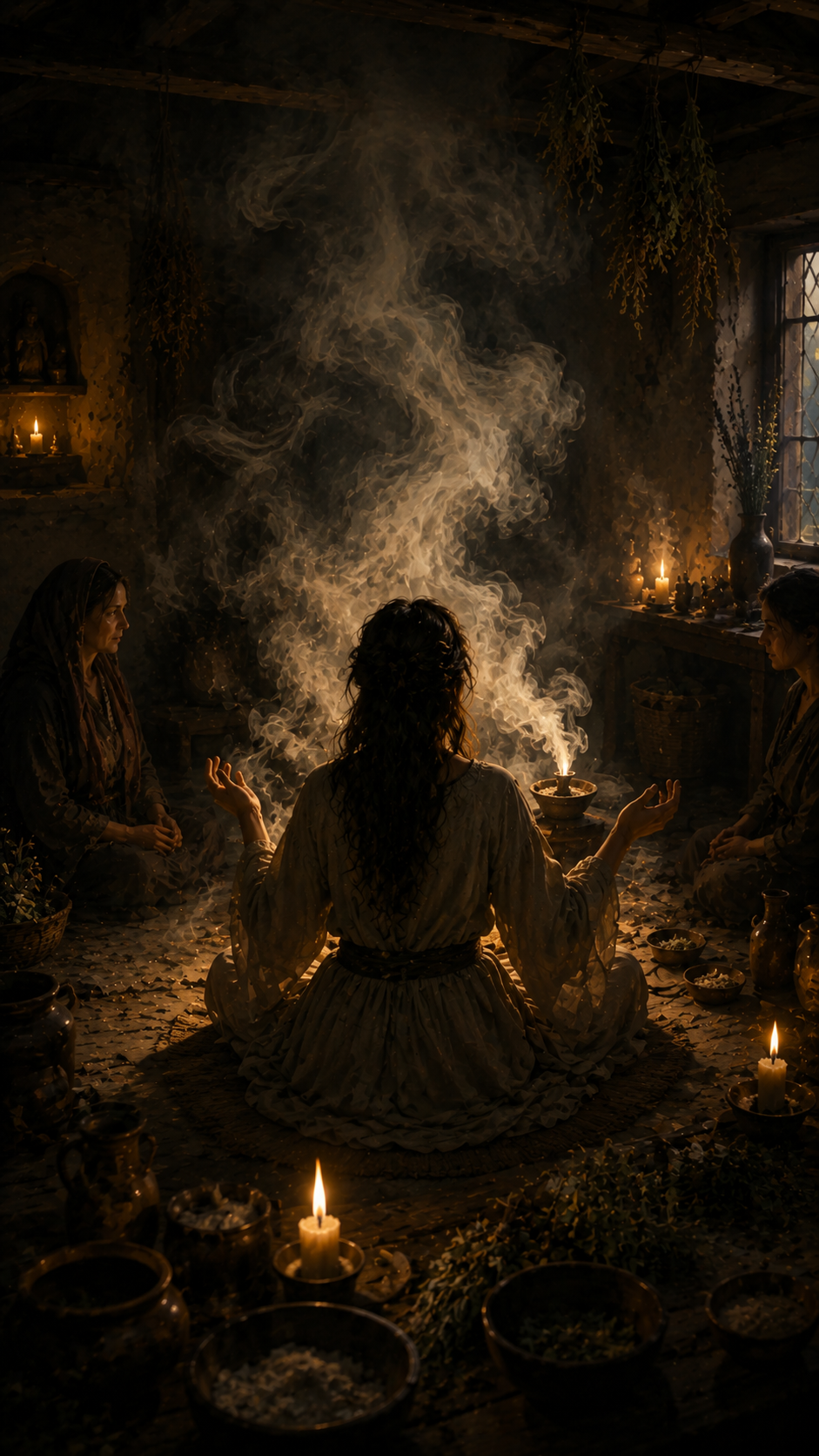
Throughout Europe, mugwort occupied a unique place in folk magic.
It was commonly associated with midsummer celebrations and seasonal rituals. In many regions, people wore mugwort garlands during summer festivals, believing the plant could protect them from illness, bad luck, and supernatural harm.
Its association with dreams, visions, protection, and spiritual awareness helped establish mugwort as one of the most important magical herbs in European folklore.
Unlike many legendary plants whose stories faded with time, mugwort’s reputation endured well into the modern era.
Modern Uses of Mugwort
Today, mugwort continues to be used in herbal traditions around the world.
The plant is commonly found in herbal teas, botanical preparations, incense blends, and traditional wellness practices. It remains especially popular among individuals interested in ethnobotany, herbal history, and traditional folklore.

Researchers continue to study species within the Artemisia genus for their chemical constituents and historical medicinal applications, though many traditional uses require further scientific investigation.
As with all herbs, mugwort should be used carefully and with appropriate guidance, particularly by pregnant individuals or those with allergies to plants in the daisy family.
The Herb Between Worlds
Few plants have traveled such a fascinating path through human history.
Mugwort has been a healer’s tool, a traveler’s companion, a guardian against unseen dangers, and a bridge to the world of dreams. It occupied a space where medicine met mythology, where practical use blended with spiritual belief.
Whether carried by Roman soldiers, burned in ancient healing traditions, or tucked beneath a dreamer’s pillow, mugwort has remained a symbol of humanity’s enduring desire to explore the boundaries of the known and the unknown.
Long before modern science sought to explain the world, mugwort stood quietly at the threshold—an herb between worlds.
Works Cited
Chevallier, Andrew. Encyclopedia of Herbal Medicine. 3rd ed., DK Publishing, 2016.
Grieve, Maud. A Modern Herbal. Dover Publications, 1971.
Hobbs, Christopher. Medicinal Mushrooms, Herbs, and Plants. Storey Publishing, 2021.
Pliny the Elder. Natural History. Translated by H. Rackham, Harvard University Press, 1938.
Pollington, Stephen. Leechcraft: Early English Charms, Plantlore and Healing. Anglo-Saxon Books, 2000.
World Health Organization. WHO International Standard Terminologies on Traditional Medicine in the Western Pacific Region. World Health Organization, 2007.
Zohary, Daniel, Maria Hopf, and Ehud Weiss. Domestication of Plants in the Old World. 4th ed., Oxford University Press, 2012.


Comments