
The Hidden History of Plants: Valerian Root — The Herb That Pulls You Under
The Hidden History of Plants: Valerian Root — The Herb That Pulls You Under
For thousands of years, humanity has searched for ways to quiet the mind, calm the body, and escape the grip of sleepless nights. Long before modern sleep aids lined pharmacy shelves, one plant stood out among healers, physicians, and herbalists alike: valerian root.
Known today primarily as a natural sleep remedy, valerian carries a history far deeper than simple relaxation. Its story winds through ancient Greece, medieval monasteries, battlefield medicine, folk magic, and modern herbalism. Revered for its strange scent and powerful sedative qualities, valerian became known as the herb that could gently “pull you under.”

What Is Valerian Root?
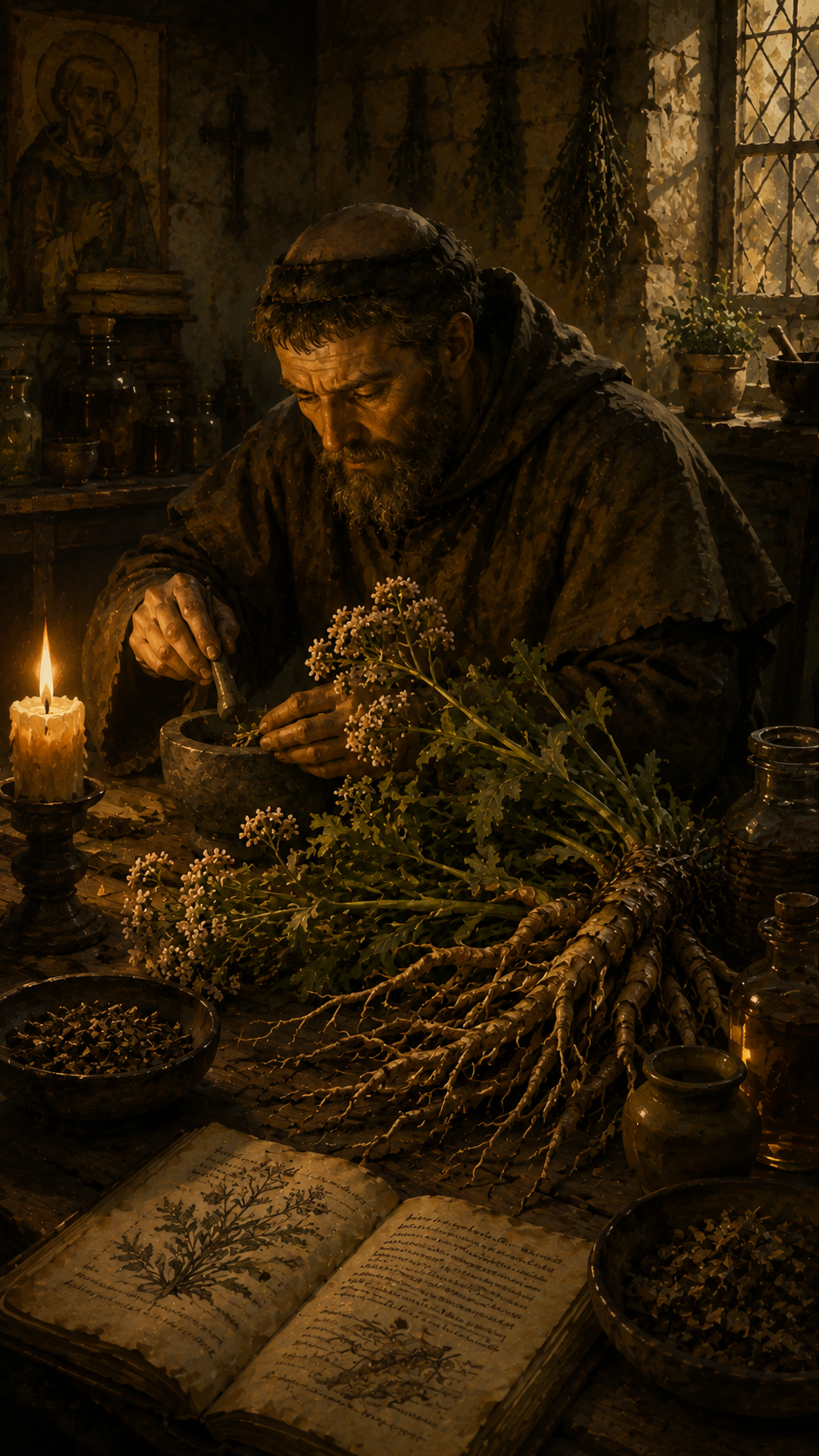
Valerian, scientifically known as Valeriana officinalis, is a flowering perennial native to Europe and parts of Asia. The plant produces clusters of delicate pink or white flowers, but its true power lies underground in its thick, aromatic roots.
The scent of valerian root is famously divisive. Some compare it to aged cheese, damp earth, or even sweaty socks. Yet despite its pungent aroma, generations of healers considered it one of the most effective calming herbs in existence.
Today, valerian is commonly used in teas, tinctures, capsules, and herbal sleep blends designed to support relaxation and restful sleep.
Ancient Origins of a Sedative Herb
The use of valerian dates back to ancient Greece and Rome. Physicians such as Hippocrates documented the plant’s medicinal qualities, while the Greek physician Galen later prescribed valerian for insomnia.
In these early civilizations, valerian was valued not only for sleep, but also for easing nervousness, trembling, headaches, and digestive discomfort. Ancient healers believed the herb had the ability to restore balance between the mind and body.
Its name likely derives from the Latin word valere, meaning “to be strong” or “to be healthy,” reflecting the plant’s long-standing association with wellness and vitality.

Valerian in Medieval Europe
During the Middle Ages, valerian root became a staple of monastery gardens and apothecaries throughout Europe. Herbalists dried and stored the roots for use in teas, poultices, and medicinal tonics.
At a time when fear, plague, and warfare were constant realities, valerian was often used to calm anxiety and promote sleep in distressed patients. Some historical records suggest it was even scattered on floors and hung in homes to ward off illness and foul air.
Medieval folk traditions also gave valerian a mystical reputation. In some regions, the herb was believed to protect against evil spirits and unnatural forces. Because of its strong odor and sedative effects, it became associated with dreams, altered states, and deep rest.
The Herb of Sleep and Surrender
Valerian’s reputation as a sleep aid endured through the centuries because people consistently noticed its effects. Unlike many stimulating medicinal herbs, valerian was known for slowing things down.
Modern researchers believe compounds within valerian root may interact with gamma-aminobutyric acid (GABA), a neurotransmitter involved in calming nervous system activity. This may help explain why valerian has traditionally been used to support relaxation and sleep quality.
Unlike modern sedatives, valerian was often described as gentler and more gradual. Herbalists traditionally prepared the root as a tea or tincture before bedtime, allowing its earthy compounds to slowly settle the body into rest.
Valerian During Times of Stress and War
Valerian’s use expanded significantly during periods of social upheaval. During both World Wars, the herb was reportedly used in parts of Europe to help calm civilians experiencing stress, anxiety, and air raid trauma.
Its reputation as a “nervine” herb — one that supports the nervous system — made it especially valuable during times of fear and exhaustion.
Even as pharmaceutical sedatives became more common in the 20th century, valerian maintained a loyal following among herbal practitioners and those seeking plant-based alternatives.
Valerian Root in Modern Herbalism
Today, valerian remains one of the most recognized herbal sleep aids in the world. It is commonly found in nighttime teas, capsules, tinctures, and wellness formulas focused on relaxation.
Many people turn to valerian as part of a broader nighttime ritual — often alongside herbs like chamomile, lemon balm, passionflower, or hops. Its enduring popularity reflects a growing interest in traditional herbal remedies and natural approaches to stress management.
However, valerian is not without caution. Because it may cause drowsiness, it should be used carefully, especially alongside sedatives or alcohol. As with all herbal products, individuals should consult a qualified healthcare professional before use, particularly if pregnant, nursing, or taking medications.

Why Valerian Still Matters
The story of valerian root is ultimately a story about humanity’s relationship with rest.
Across centuries and civilizations, people have struggled with fear, overstimulation, uncertainty, and sleeplessness. Valerian survived because it answered a deeply human need: the desire to let go, become still, and finally sleep.
Long before sleep science and prescription sedatives, there was simply a root pulled from the earth, dried beside a fire, and brewed into a calming tea at the end of a difficult day.
And even now, thousands of years later, valerian continues to whisper the same promise it always has:
Rest.
Works Cited
American Botanical Council. “Valerian.” HerbalGram, www.herbalgram.org. Accessed 8 May 2026.
Bent, Stephen, et al. “Valerian for Sleep: A Systematic Review and Meta-Analysis.” The American Journal of Medicine, vol. 119, no. 12, 2006, pp. 1005–1012.
Blumenthal, Mark, editor. The Complete German Commission E Monographs: Therapeutic Guide to Herbal Medicines. American Botanical Council, 1998.
National Center for Complementary and Integrative Health. “Valerian.” U.S. Department of Health and Human Services, www.nccih.nih.gov. Accessed 8 May 2026.
Tilgner, Sharol. Herbal Medicine From the Heart of the Earth. Wise Acres Press, 2009.
Wood, Matthew. The Earthwise Herbal: A Complete Guide to Old World Medicinal Plants. North Atlantic Books, 2008.


Comments