
The Hidden History of Plants — Willow Bark: The Bark That Became Medicine
The Hidden History of Plants — Willow Bark: The Bark That Became Medicine
For thousands of years, long before modern pharmaceuticals lined store shelves, people turned to the natural world for relief from pain and illness. Among the most powerful of these ancient remedies was the humble bark of the willow tree—known today as Willow Bark. What began as a traditional remedy would eventually reshape modern medicine, giving rise to one of the most widely used drugs in history.
This is the story of how a tree became medicine.
Ancient Roots: Pain Relief from the Wild
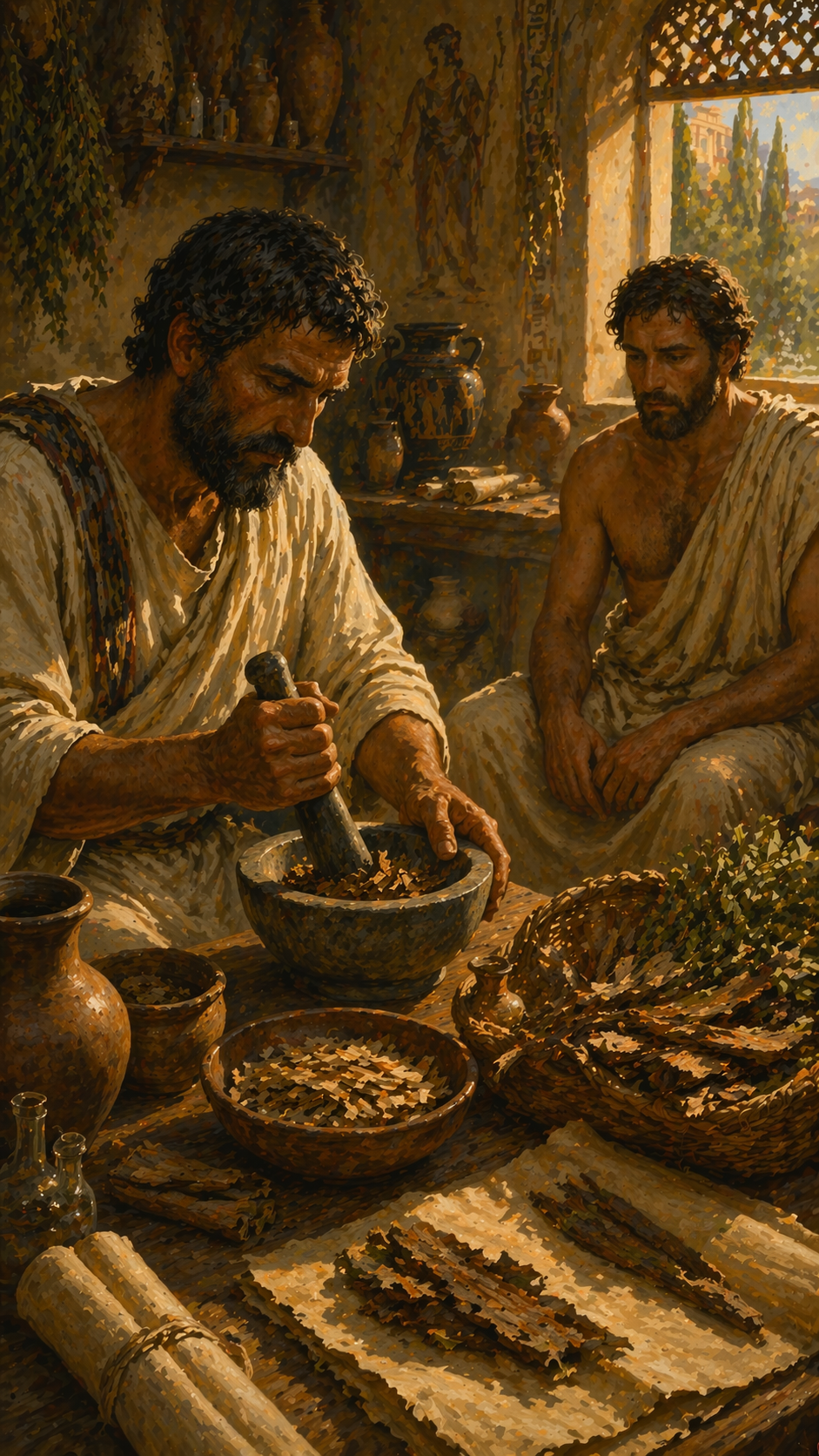
The medicinal use of willow bark stretches back to some of the earliest recorded civilizations. Ancient cultures—including the Egyptians, Greeks, and Chinese—recognized its ability to reduce pain and fever.
Around 400 BCE, the Greek physician Hippocrates documented the use of willow bark and leaves to relieve pain during childbirth and reduce fevers. His observations weren’t guesswork—they were early clinical insights based on repeated outcomes.
Similarly, ancient Egyptian medical texts describe preparations using willow to treat inflammation. Across continents, different cultures arrived at the same conclusion: this tree had real power.
The Active Compound: Nature’s Blueprint
What made willow bark so effective wasn’t magic—it was chemistry.
Willow bark contains a compound called salicin, which the body converts into salicylic acid. This compound is responsible for reducing inflammation, pain, and fever. In essence, ancient healers were unknowingly harnessing a naturally occurring anti-inflammatory agent.
By the 18th century, European scientists began formally studying willow bark. In 1763, English clergyman Edward Stone presented findings to the Royal Society detailing its effectiveness against fevers, marking one of the first scientific validations of a traditional remedy.
From Tree to Tablet: The Birth of Modern Medicine

The real turning point came in the 19th century, when chemists isolated and refined salicin into salicylic acid. While effective, early forms were harsh on the stomach.
In 1897, a breakthrough occurred at the German company Bayer. Chemist Felix Hoffmann synthesized a more stable and less irritating version: acetylsalicylic acid.
This compound would become known worldwide as Aspirin.
What started as bark stripped from a tree had now become a cornerstone of modern medicine—used for everything from headaches to heart health.
A Living Legacy: Willow Bark Today
Despite the rise of synthetic drugs, willow bark has never disappeared. It remains a respected herbal remedy in modern herbalism, often used in teas, tinctures, and extracts.
Today, it is commonly used for:
Mild to moderate pain relief
Reducing inflammation
Supporting joint health
Managing headaches and fevers
However, it’s important to recognize that natural does not always mean risk-free. Willow bark can interact with medications and may not be suitable for everyone—particularly those sensitive to salicylates.
Still, its continued use speaks to its effectiveness. Thousands of years later, it remains relevant.

The Bigger Picture: Remembering the Foundation
The story of willow bark is more than just a history lesson—it’s a reminder.
Modern medicine didn’t appear out of nowhere. It was built on generations of observation, experimentation, and trust in the natural world. The pharmaceutical breakthroughs we rely on today often have roots that run deep into traditional plant knowledge.
Willow bark is proof that nature has always been a teacher—we just had to learn how to listen.
Conclusion
From ancient healers to modern laboratories, willow bark has traveled an extraordinary path. It bridged the gap between traditional herbalism and scientific medicine, laying the groundwork for one of the most important drugs ever created.
It wasn’t just a remedy.
It was the beginning of something much bigger.
Works Cited (MLA Format)
Desborough, Michael J. R., and David M. Keeling. “The Aspirin Story – From Willow to Wonder Drug.” British Journal of Haematology, vol. 177, no. 5, 2017, pp. 674–683.
Mahdi, Jasim G. “Medicinal Potential of Willow: A Chemical Perspective of Aspirin Discovery.” Journal of Saudi Chemical Society, vol. 14, no. 3, 2010, pp. 317–322.
Stone, Edward. “An Account of the Success of the Bark of the Willow in the Cure of Agues.” Philosophical Transactions of the Royal Society, 1763.
U.S. National Library of Medicine. “Aspirin.” MedlinePlus, medlineplus.gov.
European Medicines Agency. “Assessment Report on Salix Cortex (Willow Bark).”



Comments