
The Hidden History of Plants – Calendula: The Golden Healer
The Hidden History of Plants – Calendula: The Golden Healer
For centuries, long before modern medicine filled pharmacy shelves, people turned to the earth for healing. Among the most trusted of these natural remedies was a simple golden flower—Calendula, often called pot marigold.
But this plant was never just ornamental. It was a healer, a protector, and in many ways, a quiet cornerstone of traditional medicine across cultures.

A Flower Rooted in Ancient Healing
Calendula’s story begins in the ancient Mediterranean, where it was valued not only for its vibrant color but for its medicinal properties. The Romans named it Calendula because it seemed to bloom with the calendar—often appearing at the start of each month.
Ancient Greek and Roman physicians used calendula in poultices and infusions to treat wounds, reduce inflammation, and support skin repair. Its reputation as a healing plant spread quickly, carried through trade routes and early medical texts.
By the time of early herbal traditions, calendula had become a staple in natural healing practices—trusted not because of theory, but because of results.
The Medieval Healer’s Companion

During the Middle Ages, calendula became deeply embedded in European herbal medicine. Monks and physicians cultivated it in monastery gardens, where it was used to treat cuts, burns, infections, and digestive issues.
Calendula petals were often infused into oils and salves, creating some of the earliest forms of topical medicine. These preparations were applied to wounds to promote healing and reduce the risk of infection—centuries before the discovery of antibiotics.
It was also used internally in teas and broths, believed to support digestion and overall wellness. In many ways, calendula bridged the gap between food and medicine—something modern herbalism is only now beginning to fully rediscover.
More Than Medicine: Symbolism and Protection
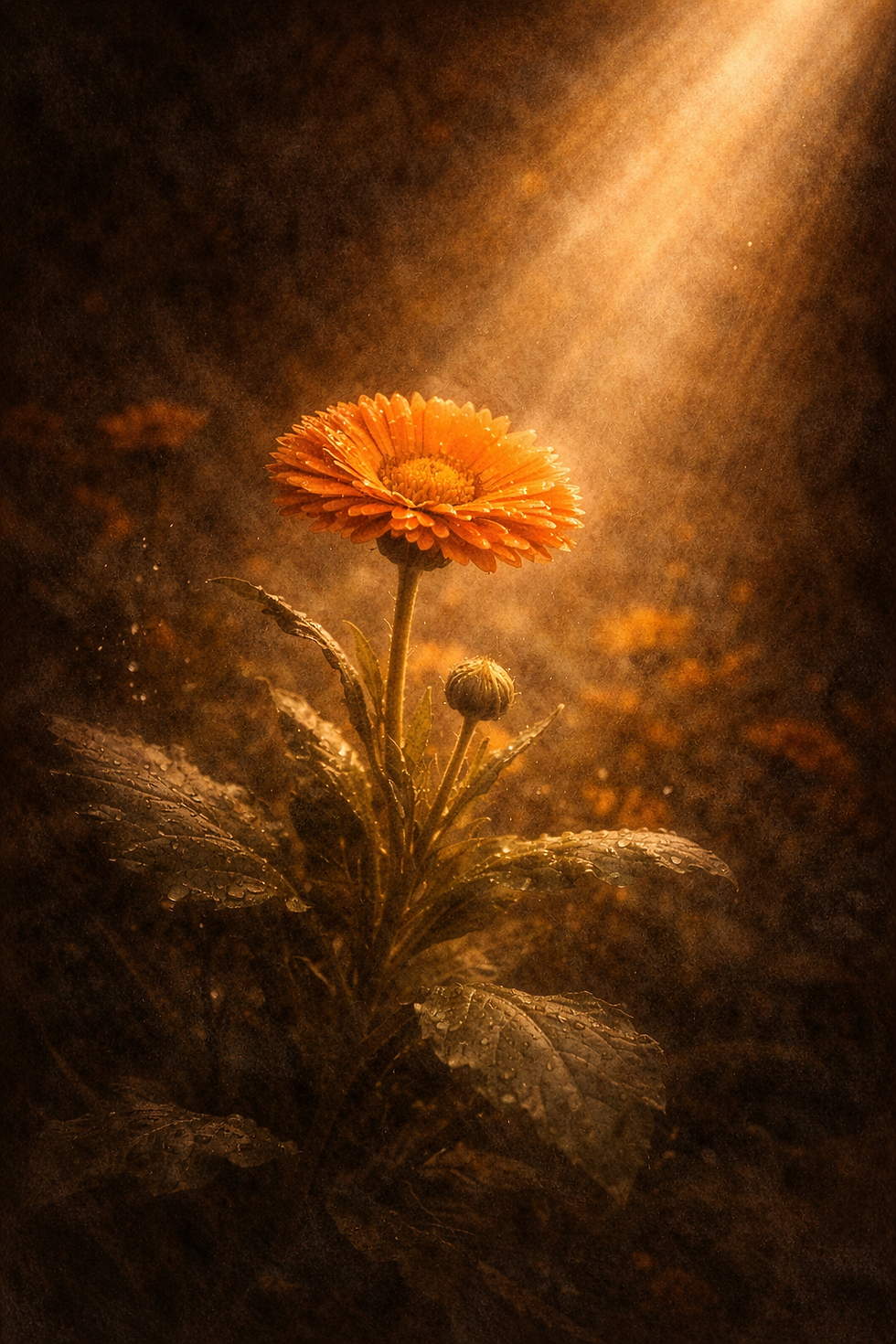
Calendula’s role wasn’t limited to physical healing. Across cultures, it carried symbolic meaning tied to protection, renewal, and light.
In European folklore, calendula was associated with the sun—its golden petals opening with daylight and closing at dusk. It became a symbol of resilience and regeneration, often planted near homes for protection.
In some traditions, calendula was used in rituals and ceremonies meant to promote healing, ward off illness, or bring comfort during times of hardship. Whether symbolic or practical, its presence was deeply tied to well-being.
What Makes Calendula Effective?
Modern research helps explain what traditional healers observed centuries ago.
Calendula contains a range of bioactive compounds, including triterpenoids, flavonoids, and carotenoids, which contribute to its:
Anti-inflammatory properties
Antimicrobial activity
Wound-healing support
Skin-soothing effects
Studies have shown that calendula extracts can promote tissue regeneration and accelerate wound healing, particularly in minor cuts, burns, and skin irritations.
This isn’t just folklore—it’s chemistry working in alignment with centuries of practical use.
Calendula in Modern Herbalism
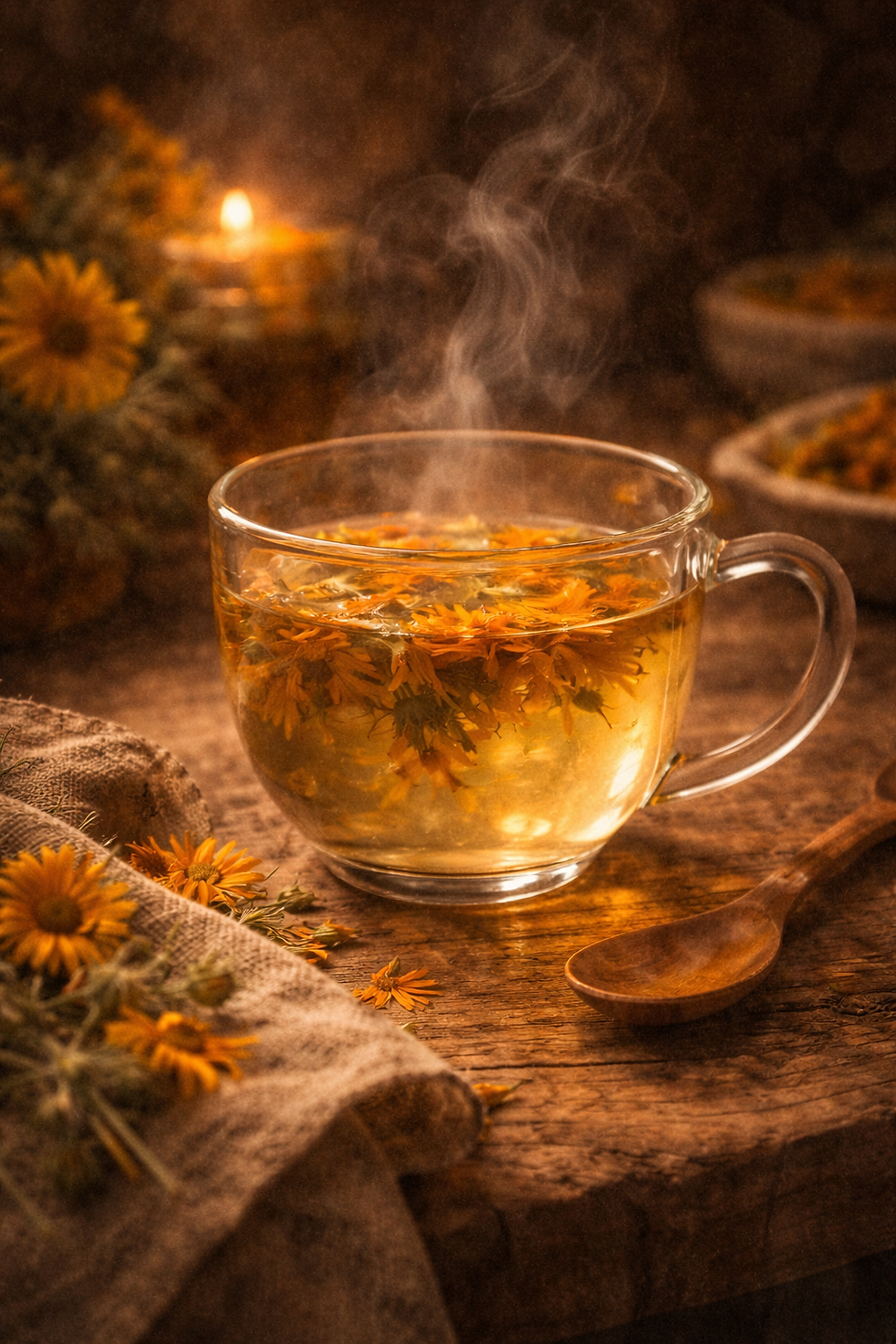
Today, calendula remains one of the most widely used herbs in natural skincare and herbal medicine.
You’ll find it in:
Salves and balms for dry or damaged skin
Oils infused for topical healing
Teas used to support digestion and inflammation
Natural skincare products designed to soothe and restore
Its versatility is part of what makes it so valuable. Calendula isn’t a niche remedy—it’s a foundational plant that continues to prove its worth across generations.
A Return to the Golden Standard
Calendula’s enduring presence in both traditional and modern practices says something important:
We’re not discovering something new—we’re remembering something old.
In a world that often looks for complex solutions, calendula stands as a reminder that effective healing doesn’t always come from innovation. Sometimes, it comes from paying attention to what has worked for centuries.
The golden healer didn’t earn its name by accident. It earned it through time, use, and trust.
Works Cited
European Medicines Agency. Assessment report on Calendula officinalis L., flos. EMA/HMPC.
National Center for Complementary and Integrative Health (NCCIH). Herbs at a Glance: Calendula.
Upton, Roy. Calendula Flower: Calendula officinalis. American Herbal Pharmacopoeia, 2013.
Della Loggia, R., et al. “The role of triterpenoids in the topical anti-inflammatory activity of Calendula officinalis flowers.” Planta Medica, 1994.
Preethi, K.C., et al. “Antimicrobial activity of flower extracts of Calendula officinalis Linn.” Ancient Science of Life, 2009.
Arora, D., et al. “Wound healing potential of Calendula officinalis extract.” Journal of Clinical Biochemistry and Nutrition, 2010.
Grieve, M. A Modern Herbal. Dover Publications.
Chevallier, Andrew. Encyclopedia of Herbal Medicine. DK Publishing.



Comments