
The Hidden History of Plants: Cinnamon
- fohmidivad
- Mar 15
- 4 min read
The Bark Worth More Than Gold
Few spices have shaped world history quite like cinnamon. Today, it’s a familiar scent in kitchens and bakeries—associated with warm drinks, baked goods, and comfort. But for thousands of years, cinnamon was far more than a flavor. It was a luxury commodity, a medicinal ingredient, and even a catalyst for global exploration.
Behind this humble bark lies a fascinating story of ancient trade routes, medical traditions, and fierce competition between empires.
What Cinnamon Actually Is
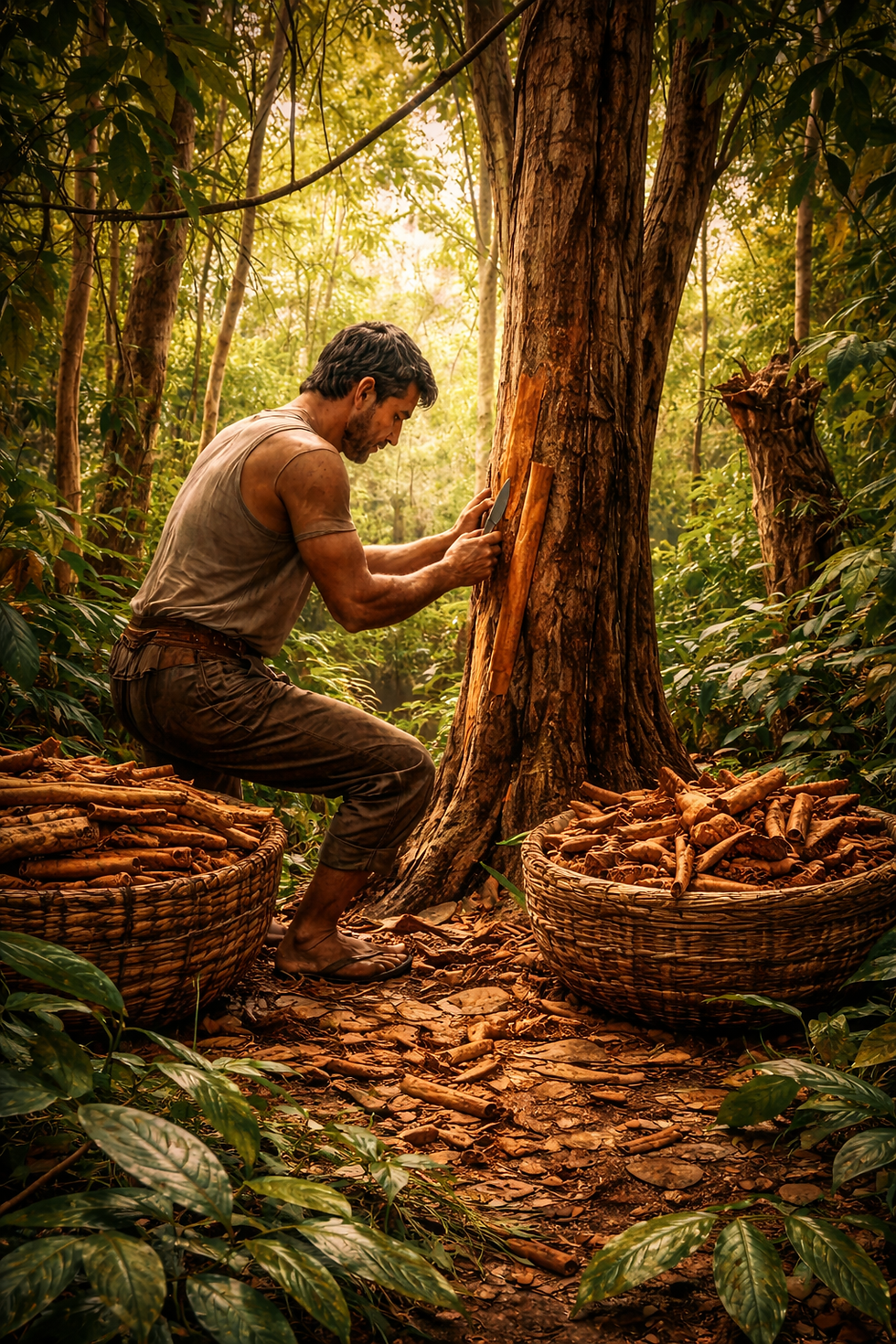
Cinnamon comes from the inner bark of trees belonging to the genus Cinnamomum. When the bark is harvested and dried, it naturally curls into the familiar sticks we recognize today.
Two main types dominate global use:
Ceylon cinnamon (Cinnamomum verum), often called “true cinnamon,” native to Sri Lanka.
Cassia cinnamon (Cinnamomum cassia and related species), more commonly sold in North America and produced largely in China, Indonesia, and Vietnam.
While the flavors are similar, Ceylon cinnamon tends to be more delicate and complex, while cassia is stronger and more pungent.
Cinnamon in the Ancient World
Cinnamon’s story begins long before written history. Evidence suggests that it was traded throughout Asia and the Middle East more than 4,000 years ago.
In ancient Egypt, cinnamon was used in embalming rituals, perfumes, and incense. Because the spice had to travel vast distances through trade networks, it was extraordinarily valuable.
Greek historian Herodotus, writing in the 5th century BCE, described elaborate myths surrounding cinnamon’s origins—stories likely invented by traders to protect their supply sources. Some claimed the bark was collected from the nests of giant birds in distant lands. These tales kept the true growing regions secret and helped maintain high prices.
The Spice That Drove Global Trade

For centuries, Arab merchants controlled the cinnamon trade between Asia and the Mediterranean. They carefully guarded the location of cinnamon’s true source—Sri Lanka and parts of Southeast Asia.
By the late Middle Ages, cinnamon had become one of Europe’s most sought-after spices. Its uses ranged from cooking and medicine to food preservation.
This demand played a role in the Age of Exploration. European powers began searching for direct sea routes to the spice-producing regions of Asia, hoping to bypass middlemen.
Cinnamon, along with pepper, cloves, and nutmeg, helped motivate some of the earliest global maritime trade routes.
Colonial Competition for Cinnamon

Once Europeans discovered where cinnamon grew, control over the spice became a geopolitical prize.
The Portuguese gained control of Sri Lanka’s cinnamon trade in the early 16th century.
The Dutch East India Company seized control in the 17th century, establishing a highly organized cinnamon-harvesting system.
Later, the British Empire took control of Sri Lanka in 1796, continuing the lucrative trade.
For centuries, cinnamon remained one of the most valuable spices in the world. Entire colonial economies were built around its cultivation and export.
Cinnamon in Traditional Medicine

Beyond trade and cuisine, cinnamon also has a long history in traditional medicine.
Ancient medical systems used cinnamon for a variety of purposes:
Traditional Chinese Medicine used cassia cinnamon to support circulation and warmth in the body.
Ayurvedic medicine incorporated cinnamon for digestive support and respiratory health.
Medieval European physicians often prescribed cinnamon for digestive complaints and infections.
Modern scientific research has explored several potential benefits of cinnamon, including its antimicrobial properties and possible effects on blood sugar regulation. While studies are ongoing, cinnamon continues to be investigated for its role in metabolic health.
A Spice That Still Connects Us to the Past
Today, cinnamon is inexpensive and widely available, but its history reminds us that everyday plants often have extraordinary stories behind them.
For thousands of years, a simple piece of tree bark traveled across deserts, oceans, and empires—shaping trade routes, influencing exploration, and appearing in medicines and rituals around the world.
The next time you sprinkle cinnamon into coffee, tea, or baked goods, you’re participating in a tradition that stretches back millennia.
And like many plants we explore in this series, cinnamon reminds us that nature’s ingredients have always been deeply intertwined with human history.
Sources
Anderson, E. N. (2014). Everyone Eats: Understanding Food and Culture. NYU Press.
Dalby, A. (2000). Dangerous Tastes: The Story of Spices. University of California Press.
Herodotus. The Histories, Book III.
McGee, H. (2004). On Food and Cooking: The Science and Lore of the Kitchen. Scribner.
National Center for Complementary and Integrative Health. “Cinnamon.” U.S. National Institutes of Health.
Ravindran, P. N., & Nirmal Babu, K. (2004). Cinnamon and Cassia: The Genus Cinnamomum. CRC Press.
United Nations Food and Agriculture Organization (FAO). “Cinnamon Production and Trade.”


Comments