
The Hidden History of Plants: St. John’s Wort – The Light That Held Back the Dark
The Hidden History of Plants: St. John’s Wort – The Light That Held Back the Dark
Introduction: A Plant of Light in Dark Times
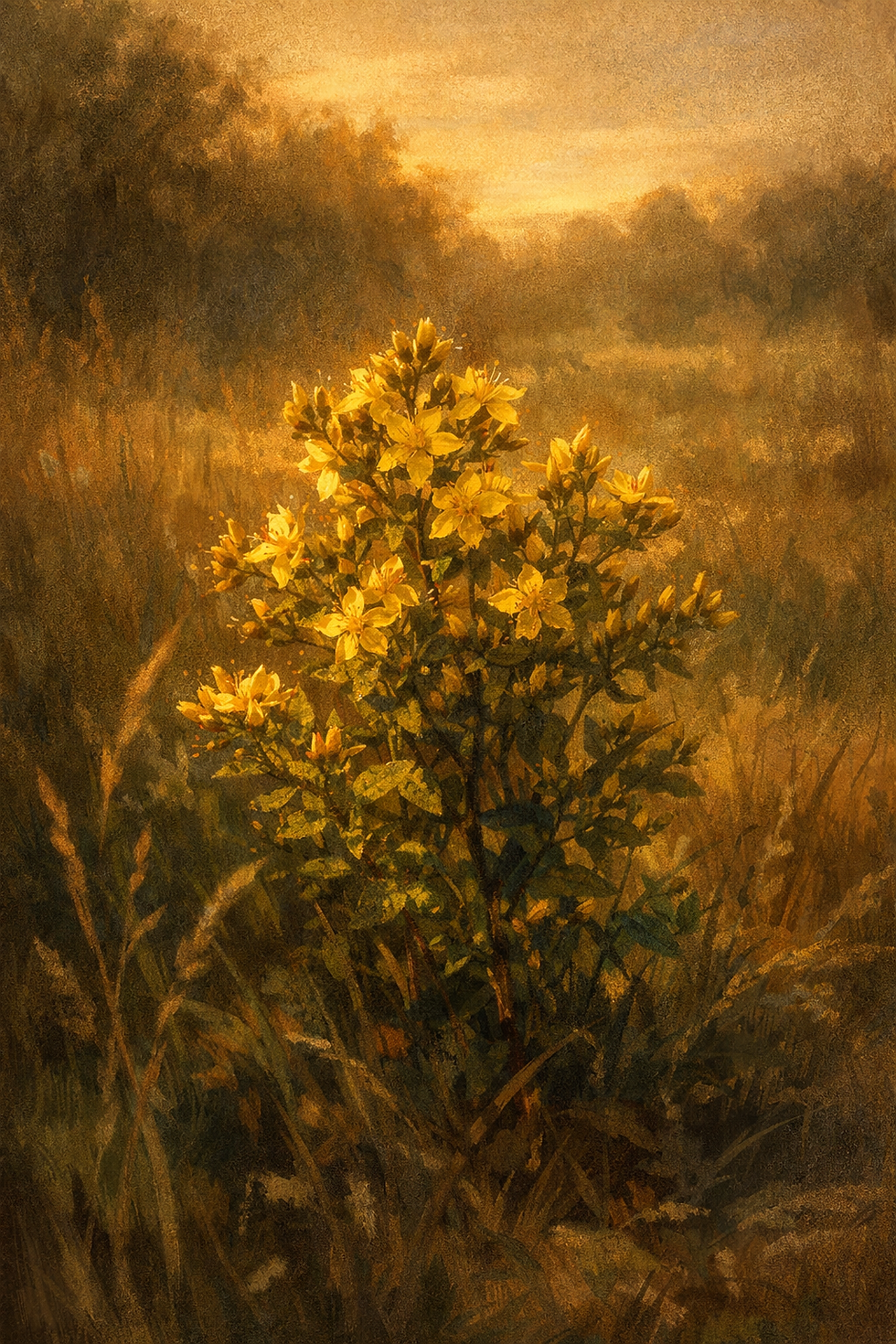
For centuries, few plants have carried as much symbolism—and as much controversy—as St. John’s Wort (Hypericum perforatum). Known for its bright yellow flowers and sun-like appearance, this plant has long been associated with protection, healing, and light overcoming darkness.
But beyond folklore and tradition, St. John’s Wort holds a documented place in both ancient herbal medicine and modern clinical research—particularly for its role in supporting mood and emotional well-being.
This is the story of a plant that bridged myth and medicine.
A Sacred Plant of Protection

St. John’s Wort earned its name from its traditional harvest time—around the feast of St. John’s Day. In medieval Europe, it was believed that the plant held protective powers strong enough to ward off evil spirits, curses, and unseen forces.
Bundles of the herb were hung above doorways and burned in rituals meant to “drive out darkness.” Its golden flowers, blooming at the height of summer, reinforced its symbolism as a bearer of light.
Even the plant’s appearance contributed to its mystique. When crushed, its buds release a deep red pigment—often interpreted historically as a sign of hidden power or life force.
Ancient and Traditional Uses
Long before modern science examined its chemistry, St. John’s Wort was used across cultures for a variety of conditions.
Ancient Greek physicians, including Hippocrates and later Dioscorides, documented its use for:
Wound healing
Nervous system support
Digestive complaints
In European folk medicine, it became known as a remedy for what was often described as “melancholy”—a condition we would now associate with depression.
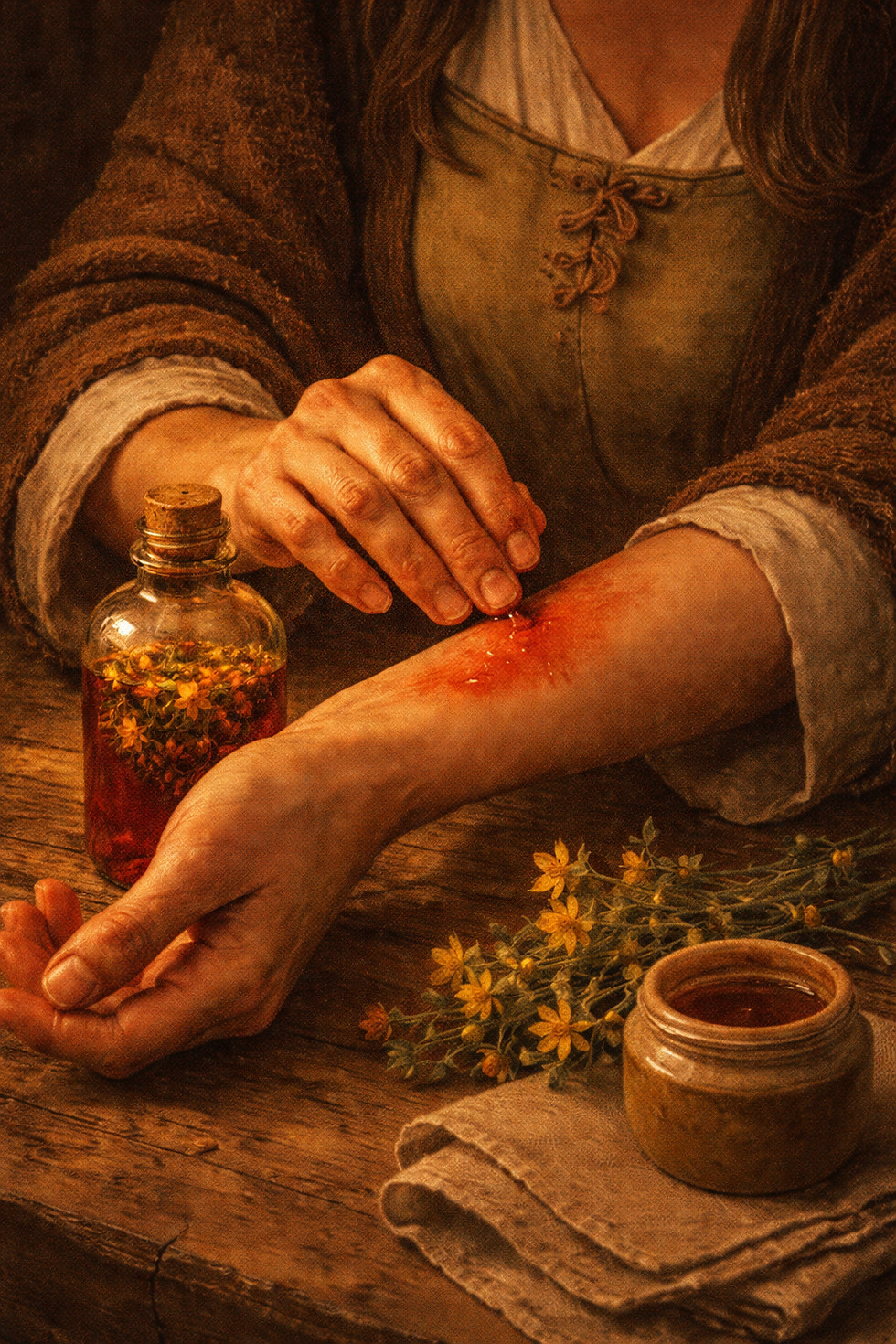
Topically, infused oils made from the plant were widely used to soothe burns, nerve pain, and inflammation—applications that are still practiced in herbal traditions today.
The Science Behind the Plant

Modern research has focused heavily on St. John’s Wort’s effects on mood disorders, particularly mild to moderate depression.
Key active compounds include:
Hypericin
Hyperforin
These compounds are believed to influence neurotransmitters such as serotonin, dopamine, and norepinephrine—chemicals that regulate mood.
Multiple clinical studies, including reviews supported by organizations like the National Center for Complementary and Integrative Health, suggest that standardized extracts of St. John’s Wort may be as effective as some conventional antidepressants for mild to moderate depression—with fewer side effects in certain cases.
However, this is where things get serious.
A Word of Caution: Powerful and Complex
St. John’s Wort is not a casual herb.

It is known to interact with a wide range of medications by affecting how the liver processes drugs. This includes:
Antidepressants
Birth control pills
Blood thinners
Organ transplant medications
These interactions can significantly reduce the effectiveness of medications or increase risks.
Because of this, institutions like the U.S. Food and Drug Administration and the National Institutes of Health strongly advise consulting a healthcare professional before using St. John’s Wort—especially in supplement form.
In short: this plant is powerful, but it demands respect.
The Meaning Behind “The Light That Held Back the Dark”

The title isn’t just poetic—it reflects both historical belief and modern understanding.
Traditionally, St. John’s Wort was used to “drive out darkness,” whether that meant evil spirits or unseen forces affecting the mind.
Today, we understand that its compounds can influence brain chemistry in ways that may help regulate mood.
That connection—between ancient symbolism and modern science—is what makes this plant so compelling.
It doesn’t just represent light.
In some cases, it helps restore it.
St. John’s Wort in the Modern World
Despite its long history, St. John’s Wort remains widely used today in herbal medicine, particularly in Europe where it is commonly prescribed for mild depression.
It is available in several forms:
Capsules and standardized extracts
Teas
Tinctures
Infused oils for topical use
However, quality, dosage, and preparation methods vary significantly—making education and sourcing critical for safe use.
Final Thoughts: A Plant Worth Understanding
St. John’s Wort stands at the intersection of folklore, medicine, and modern science.
It reminds us that many of the plants dismissed as “old remedies” often hold deeper truths—waiting to be understood, validated, or respected in new ways.
But it also serves as a warning:
Not everything natural is simple.
And not everything powerful is harmless.
If there’s one takeaway, it’s this—
knowledge matters just as much as tradition.
SEO Focus Keywords
St. John’s Wort benefits
Hypericum perforatum uses
Natural remedies for depression
Herbal medicine for mood support
History of St. John’s Wort
Sources
National Center for Complementary and Integrative Health (NCCIH). St. John’s Wort and Depression.
National Institutes of Health (NIH). St. John’s Wort: Overview of Uses and Safety.
European Medicines Agency (EMA). Assessment Report on Hypericum perforatum.
Linde, K., et al. (2008). St John’s wort for major depression. Cochrane Database of Systematic Reviews.
U.S. Food and Drug Administration (FDA). Herbal Supplement Safety and Drug Interactions.
Barnes, J., Anderson, L. A., & Phillipson, J. D. (2001). St John’s wort (Hypericum perforatum L.): a review of its chemistry, pharmacology and clinical properties.


Comments